ServicesTax Management
Tax Management in Freehold, NJ
We look at your portfolio, your retirement accounts and your income in terms of what you will owe. Then we plan trades, withdrawals and conversions so less of your wealth goes to taxes over the long term, working alongside the accountant who prepares your return.

Planning for taxes all year, not just in April
Most people deal with taxes once a year, when the return is already a record of decisions made months earlier. Tax management moves those decisions forward. Which account a bond fund sits in, when a gain gets realized, how much to draw from an IRA in a given year: each one changes what you owe, and each one can be planned.
We are an advisory firm, not a tax preparer, and we do not file returns. Our work is the investment and withdrawal side. We are Series 66 licensed and hold the Chartered Retirement Planning Counselor (CRPC) designation, which counts most here once required distributions and Social Security enter the picture.
We keep our team small on purpose. The person who sets up your tax plan is the same one reviewing it in the fall and talking with your accountant in the spring, so nothing gets lost in a handoff.
What our tax management work covers
Asset location
We place investments in the accounts where they are taxed most lightly. Income-heavy holdings often belong in an IRA or 401(k), while broad stock funds held for years may fit a taxable account better.
Tax-loss harvesting
When a holding falls below what you paid, we may sell it to capture the loss and buy a similar, not identical, investment so your allocation stays intact. We watch the 30-day wash-sale window so the loss actually counts.
Roth conversion timing
The years between leaving work and starting Social Security or required distributions often carry lower income. We model whether converting part of a traditional IRA in those years makes sense, and how much, before anything moves.
Withdrawal order in retirement
We decide which accounts to draw from, and in what mix, to keep your bracket steady. That also helps avoid an unexpected jump in Medicare premiums a couple of years later.
Charitable giving with less tax
Giving appreciated shares instead of cash, or making qualified charitable distributions from an IRA after age 70½, can let the same gift cost you less.
Working with your CPA
We send your accountant realized gains, cost basis notes and conversion amounts before they need them. When they flag something, we listen and adjust.
Signs it is time to plan around taxes
- A tax bill caught you off guard
- Fund distributions, a bonus or an IRA withdrawal pushed your bill well past what you expected. That usually means decisions were made without anyone watching the tax side.
- Much of your wealth sits in one stock
- Employer shares or an old holding with large gains can feel impossible to sell. A staged plan over several years can reduce the risk without one large tax hit.
- Retirement is a few years away
- Required minimum distributions now begin at age 73. The years before then are often the best window to shape what those distributions will look like.
- A big one-time income year is coming
- Selling a business or a property can push you into a much higher bracket. Planning ahead lets you pair gains with losses, giving or other moves in the same year.
- Your accounts were never set up to work together
- Several old 401(k)s, a brokerage account and an IRA opened at different times rarely add up to a tax-efficient whole.
How we work through your tax picture
- 1
Introductory meeting
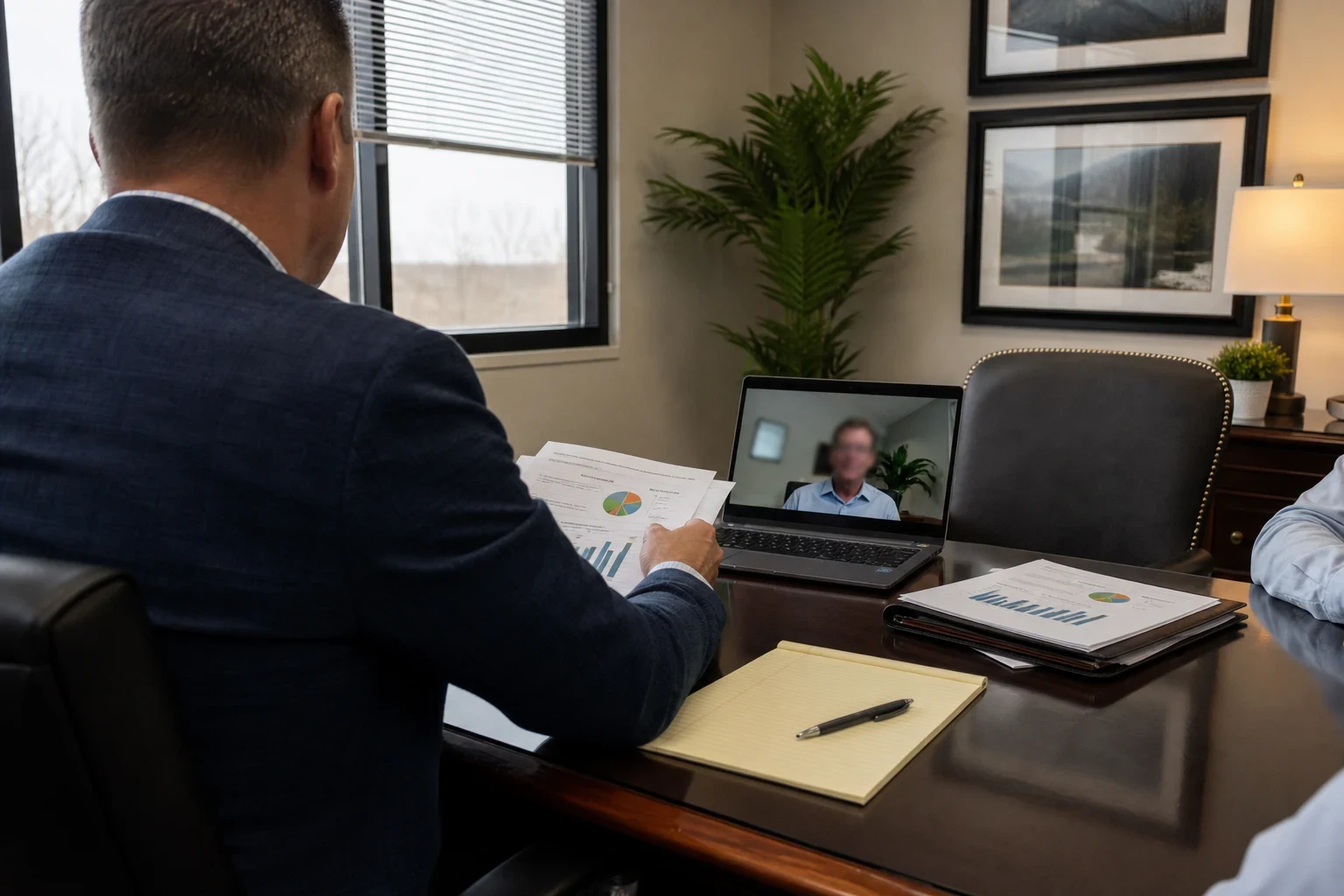
The first step is an unhurried talk, held in our office or over phone or video, whichever suits you. We ask about your goals and where taxes have been a sore point, then walk through how we would approach your situation.
- 2
Gathering the full picture
We review your recent returns, account statements and cost basis records. With your permission, we contact your CPA early so both of us are working from the same facts.
- 3
Modeling the options
We project your brackets for the next several years and show where conversions, harvesting or a different withdrawal order could help. You see the trade-offs in plain numbers before deciding anything.
- 4
Acting and reviewing through the year
We place trades and set withdrawal schedules, then revisit everything in the fall while there is still time to adjust before year end.
What shapes the cost of tax management
We explain our fees in the introductory meeting and put them in writing before you commit to anything. The cost reflects how much work your situation actually involves. There are no add-ons sprung on you later.
- Number and type of accounts
- A single IRA takes far less tracking than a mix of taxable, retirement, inherited and trust accounts, each with its own rules.
- Part of a larger relationship or on its own
- Tax management often runs inside our Wealth Management or Investment Management work. Handled as a standalone project, it is scoped differently.
- How complex your income is
- Business income, stock compensation and rental property all add moving parts to the projections.
- Coordination with other professionals
- Regular contact with your CPA or estate attorney takes time, and we account for it openly.
Tax management questions
- Do you prepare or file my tax return?
- No. We handle the investment and withdrawal decisions that shape your return, and your CPA or tax preparer files it. We share our figures with them so the two line up.
- Will tax-loss harvesting hurt my long-term returns?
- It should not change your strategy. We replace a sold holding with a similar investment so your market exposure stays roughly the same. The goal is to bank a loss you can use against gains or income, not to time the market.
- Does New Jersey tax my Social Security or retirement income?
- New Jersey does not tax Social Security benefits. Pension and IRA income can be partly or fully excluded for residents 62 and older who meet the income limits. We factor the state rules into your withdrawal plan and confirm the details with your accountant.
- Is a Roth conversion right for me?
- It depends on your bracket now compared with what you expect later, how you would pay the tax on the conversion, and whether you plan to leave those accounts to family. We run the numbers for your situation and tell you plainly if it does not make sense.
- Can you work with my current accountant?
- Yes, and we prefer to. Your accountant knows your filing history, and we know the portfolio. With your permission we coordinate directly, usually before year end and again before filing season.
Start with a conversation about your taxes
Bring your last return and a sense of your goals. In an introductory meeting we will show you where taxes may be costing you and what we would look at first.