ServicesLegacy Planning
Legacy Planning in Freehold
Your will is only part of the picture. We review how every account is titled, who is named on it and what your heirs would face, then build a legacy plan that works alongside your attorney's documents. The same advisor stays with you from the first meeting onward.
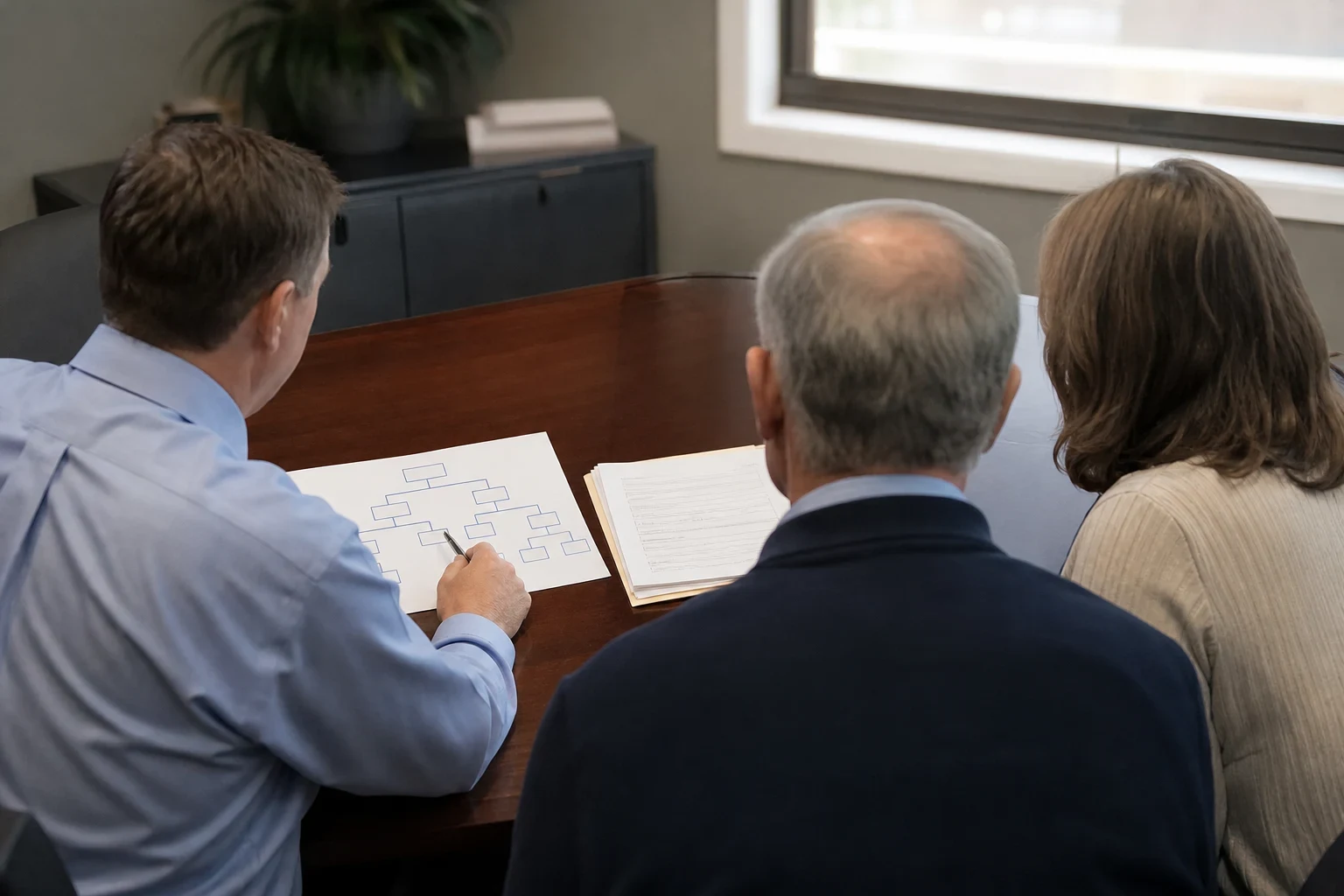
What legacy planning covers
Legacy planning is the financial side of passing on what you have built. Retirement accounts, life insurance and many bank and brokerage accounts go straight to the named beneficiary, no matter what a will says. If those forms are old, blank or out of step with your wishes, money can land in the wrong place or get stuck in probate.
We are not attorneys and do not draft wills or trusts. Our role is to make sure the accounts, the beneficiary designations and the long-term investment and tax choices line up with the documents your attorney prepares. We hold the Chartered Retirement Planning Counselor (CRPC) designation and are Series 66 licensed, which means retirement accounts and the income they pass on sit at the center of how we approach this work.
Because we are a small team, the advisor who learns your family's story is the one who carries the plan through, checks it after life changes and talks with your heirs when the time comes.
What the work includes
- Beneficiary audit
- We gather every IRA, 401(k), annuity, life policy and transfer-on-death account and list who is named as primary and contingent beneficiary. Gaps and outdated names are flagged in writing.
- Account titling review
- Joint, individual and trust-owned accounts pass in different ways. We map each one so you can see what goes through probate and what does not.
- Inherited IRA planning
- Most non-spouse heirs now have ten years to empty an inherited IRA, and the timing of those withdrawals affects their taxes. We model the options so your children are not pushed into a large tax bill in one year.
- Gifting and charitable giving
- We look at annual gifts, education funding and charitable strategies such as qualified charitable distributions from an IRA, and how each fits your retirement income.
- Coordination with your attorney and CPA
- With your permission, we share the account map with your estate attorney and tax preparer so the documents and the accounts tell the same story.
- A family letter of instruction
- We help you write down where accounts are held, who to contact and what you hope the money will do. It is not a legal document, but heirs often say it is the one they reach for first.
Signs it is time to plan your legacy
Beneficiary forms you have not seen in years
An ex-spouse, a late parent or no one at all may still be listed. These forms override a will, so an old one can quietly undo your intentions.
A marriage, divorce or new grandchild
Family changes are the most common reason a legacy plan drifts out of date.
Wealth spread across many accounts
Old workplace plans, a few brokerage accounts and policies from different decades make it hard for heirs to find everything, let alone settle it.
Heirs outside your immediate family
New Jersey's inheritance tax does not apply to spouses, children or grandchildren, but it can apply to siblings, nieces and nephews. If you plan to leave money to them, the structure matters.
A business or property you want to keep in the family
Passing on a business owner's stake or a shore house takes more planning than passing on cash, and it is far easier to arrange ahead of time.
What shapes the cost
We explain our fees during the introductory meeting, before any work begins, so nothing about the cost comes as a surprise. What legacy planning involves varies a great deal from one family to the next, and the factors below drive most of that difference.
Number and type of accounts
A couple with two retirement accounts and one policy is a simpler map than a family with a dozen accounts across several firms.
Family structure
Blended families, heirs with special needs and beneficiaries outside the immediate family call for more careful design.
Business interests and real property
Ownership stakes and real estate need valuation questions answered and more coordination with your attorney and CPA.
Ongoing relationship or a one-time review
Some clients want a single review and a written plan. Others fold legacy work into ongoing wealth management, which changes how fees are set.
How the work unfolds, step by step
- 1
Introductory meeting
We sit down at our Freehold office, or connect over a phone or video call. You describe the people and causes you want to provide for and what you hope your wealth will accomplish. We then lay out how we would approach the work.
- 2
Gathering and mapping
You bring statements, insurance policies and any existing will or trust. From those we draw a single map of every account, how it is titled and where it would pass if nothing changed.
- 3
Recommendations in writing
We go over what the map revealed, the changes we would suggest and the reasoning behind each, along with what we would send to your attorney. The decision on what to act on stays with you.
- 4
Making the changes
We help you complete updated beneficiary forms and retitle accounts, then keep following up until the custodian confirms each change.
- 5
Ongoing reviews
The same advisor revisits your plan after a birth, a death, a move, a tax law change or the sale of a property, so it stays current as your life shifts.

Legacy planning questions
I already have a will. Why would I need this?
A will controls only what passes through probate. Retirement accounts, life insurance and transfer-on-death accounts follow their beneficiary forms instead. We check that those forms and your will point the same way.
Do you write wills or trusts?
No. Those are legal documents and should come from an estate attorney. We handle the financial side and can work directly with your attorney, or suggest you find one if you do not have one yet.
Does New Jersey have an estate tax?
New Jersey repealed its estate tax in 2018 but still has an inheritance tax. Spouses, children and grandchildren are exempt, while siblings, nieces, nephews and unrelated heirs may owe it. We show you how it would apply to your plan and leave the legal details to your attorney and CPA.
Can my adult children be part of the conversation?
Yes, if you want them there. Many clients bring their children to one meeting so they know who we are and where things are kept. You decide what is shared.
How often should a legacy plan be reviewed?
We suggest a look every year or two and after any major family or tax change. Because the same advisor handles your plan throughout, those reviews are quick and nothing has to be explained twice.
Start with a conversation about your family
Tell us who you want to provide for and what you have in place today. We will explain how we would map it out and what a plan with us would involve.